At the Fort Worth Water Gardens, Downtown Slows Down to the Sound of Falling Water
The 1974 Philip Johnson park on the south end of downtown turns concrete terraces and three pools into one of the city's most distinctive public spaces.
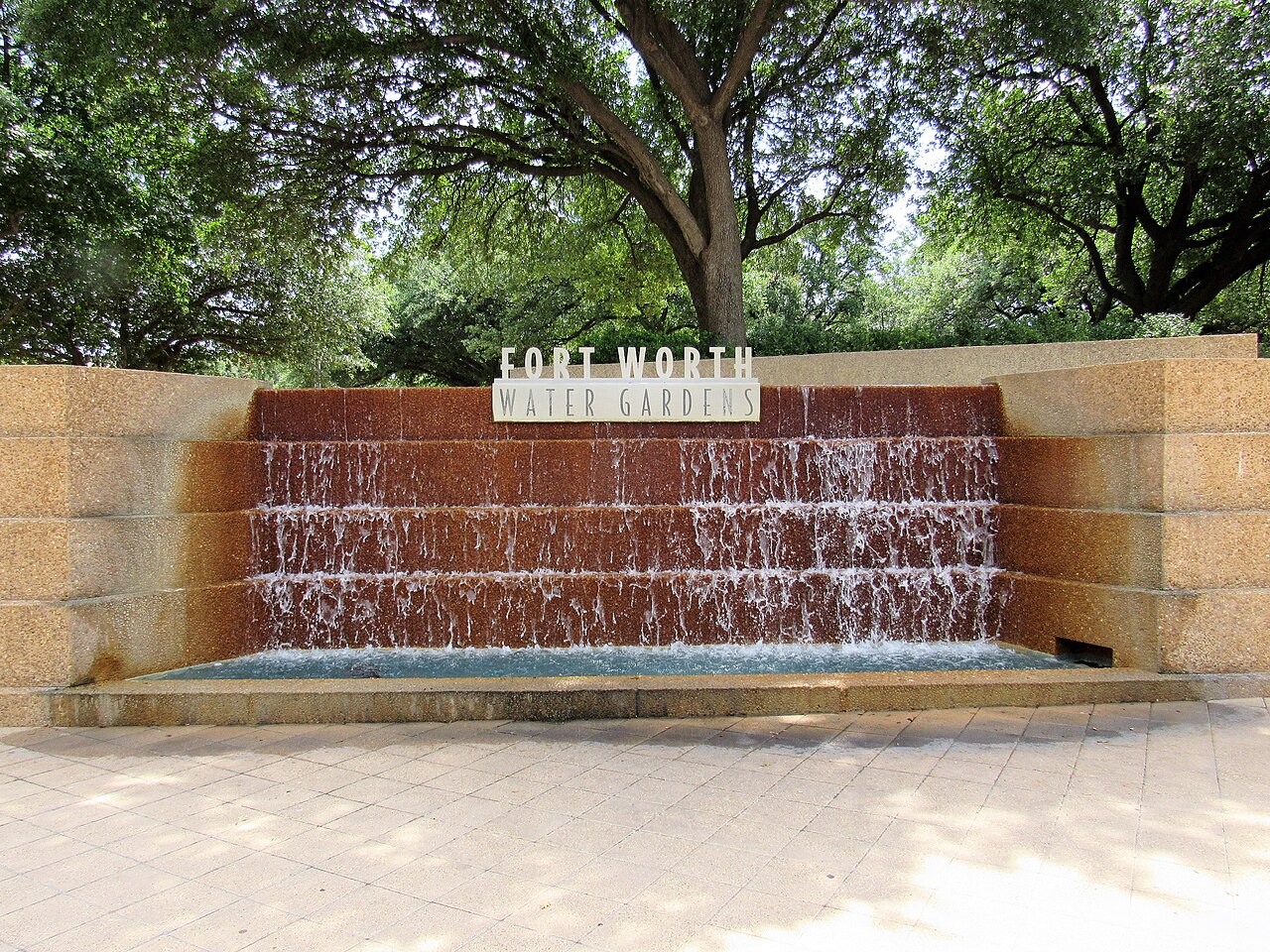
At the south end of downtown Fort Worth, between Houston and Commerce streets next to the Fort Worth Convention Center, the Fort Worth Water Gardens offer a landscape unlike anywhere else in the city. Built in 1974 and designed by architects Philip Johnson and John Burgee, the 4.3-acre park was dedicated to the city by the Amon G. Carter Foundation.
The park is organized around three pools. The Quiet Pool sits in a sunken grove of cypress trees, where thin sheets of water slide down tall walls. The Aerated Pool gathers spray fountains beneath large oak trees. The Active Pool is the centerpiece: water cascades down terraced steps, dropping about 38 feet into a small pool at the bottom, and visitors can descend into the space along the terraces.
A terraced knoll helps shield the park from the surrounding streets, and the contrast between the shaded, water-cooled interior and the downtown towers a few blocks away is much of the appeal. The Water Gardens work as a lunch-hour retreat, a photography stop, and a first landmark for visitors attending events at the convention center next door.
The park also carries a small piece of film history: scenes for the 1976 film Logan's Run were shot in the Active Pool, whose futuristic concrete forms suited the movie's imagined future. The park reopened in 2007 after modifications that included reducing the depth of the main pool.
For Fort Worth residents, the Water Gardens are a reminder that ambitious design can be public and free. No ticket is required to walk the terraces, sit by the quiet pool, or listen to thousands of gallons of water moving through the park each minute.